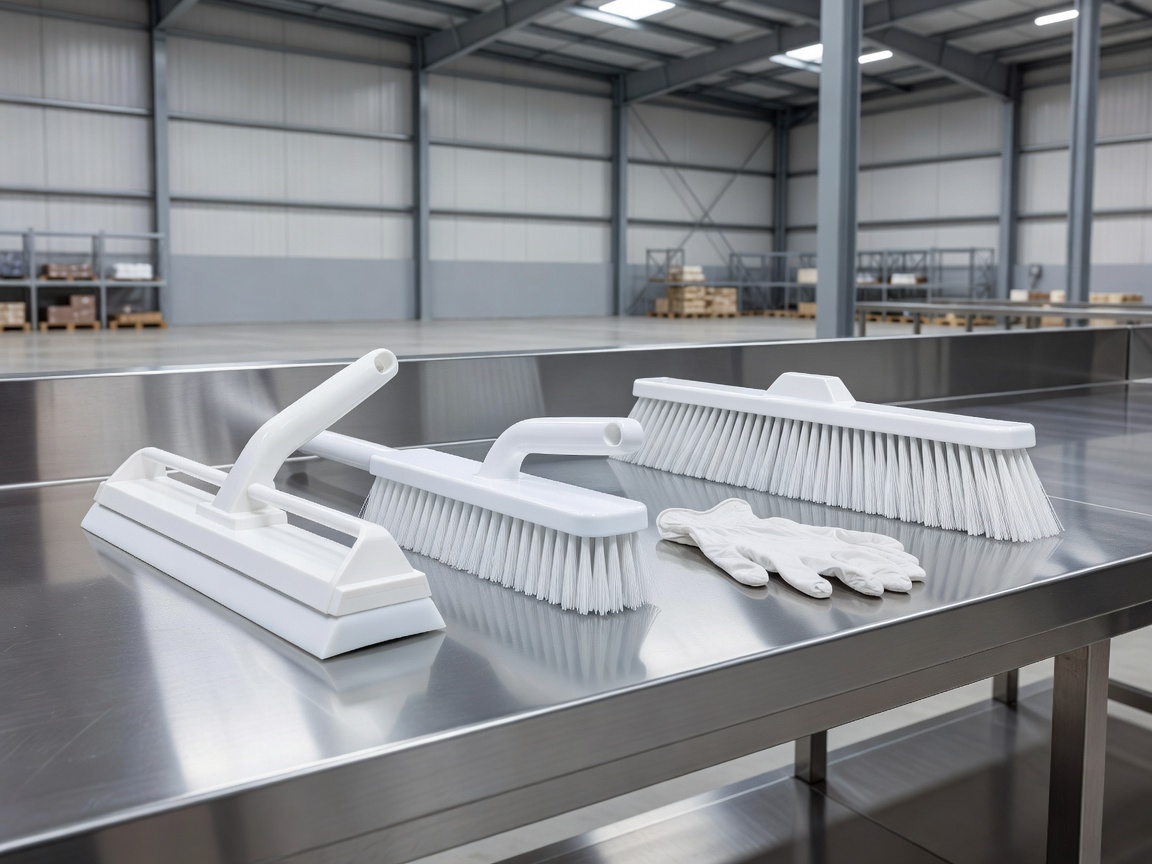
Food-safe cleaning starts with awareness of the environment. The task is not simply to make a surface look clean. It is to control sequence, access, equipment, waste and communication around food-sensitive operations.
Scope
We plan cleaning for warehouse floors, equipment surroundings, staging points, spill areas, doors, handles and selected food-contact-aware zones. The brief distinguishes surfaces by use and condition. It also identifies where the cleaning team must stop, isolate an area or obtain an operational release before work continues.
Cleaning sequence
The sequence is agreed at service level. It can include preparation, removal of visible soil, cleaning, appropriate rinsing or residue control where required, drying or release checks and documentation. Product labels and manufacturer instructions govern any chemical use. We do not provide mixing recipes or substitute site procedures.
Typical work areas
- Goods-in and staging areas.
- Spill-prone routes and transfer points.
- Surroundings of conveyors, benches and warehouse equipment.
- Waste handling points and bin storage.
- Doors, handles and frequently contacted controls.
Spill response
A spill response scope identifies the affected area, protects people and product, removes the immediate condition and records the handover. The response does not assume the source or classify a substance without site information. Unknown materials, hazardous substances and situations requiring specialist control are escalated to qualified personnel.
Separation from operations
Cleaning activity should not compete with picking, loading or exposed product handling. We plan barriers, timing, equipment placement and communication points. Where a surface is used during the working window, the site contact decides when it is released. This separation reduces confusion and makes the record more useful.
Documentation
Records can identify the date, area, scope, exceptions, observations and handover contact. Documentation is operational evidence. It is not automatically a regulatory certificate. The site remains responsible for its own food safety system, procedures and required approvals.
Advantages and limitations
A defined programme makes cleaning expectations easier to brief and review. It supports consistency across shifts and contractors. It cannot replace product-specific instructions, competent site management or a formal hazard assessment. Heavy soil, restricted access and live operations may require additional planning.
Good fit for
Ambient and chilled food warehouses, ingredient stores, distribution centres and sites where cleaning work must be separated from product movement.
What to prepare
Share the area list, surface types, product sensitivity, site cleaning procedures, chemical controls, spill arrangements, PPE rules and access windows. Identify any surface that requires owner approval before release.
Related services
Use Sanitation & Disinfection when a separate sanitation process is required, or Cold Storage Hygiene for temperature-zone planning.
Contact Service Team